You Finished Everything on the List — So Why Does It Still Feel Like You're Losing?
Let's say you had a genuinely productive day. You cleared your inbox. You finished the report early. You made the calls, sent the follow-ups, blocked the time, and still somehow made it to the gym. By any reasonable measure, you crushed it.
And yet, somewhere around 9 p.m., a familiar, low-grade dread starts creeping in. You start mentally scanning for what you didn't do. The thing you pushed to tomorrow. The email you half-answered. The project that's technically on track but doesn't feel on track. Before you know it, the whole day starts to feel like a near-miss instead of a win.
Welcome to one of the more quietly devastating features of modern work culture — the productivity paradox. The more efficiently we work, the more we expect of ourselves. The more we accomplish, the more we find to accomplish. It's not a scheduling problem. It's a brain problem. And until we understand what's actually happening under the hood, no amount of color-coded calendars or task management apps is going to fix it.
The Goalpost That Moves on Its Own
Here's the neurological reality: your brain isn't built to feel satisfied for very long. When you complete a goal — any goal — your brain releases a small burst of dopamine. It feels good for a moment. Then the signal fades, and your brain almost immediately starts scanning for the next thing to pursue. This is sometimes called the "hedonic treadmill" in psychology, and it evolved for good reasons. Complacency in the ancestral environment could get you eaten. So your brain keeps you hungry.
The problem is that modern work culture has weaponized this feature. Productivity systems, quarterly reviews, performance metrics, and the relentless language of "optimization" have created an environment where the goalpost doesn't just move — it sprints. You hit your numbers, and the benchmark gets raised. You ship the project, and three more land in your queue. Efficiency tools don't reduce workload; they raise the floor for what counts as a baseline.
Researchers have a term for this: the "completion effect" turning into what some call "achievement inflation." The more you demonstrate you can do, the more gets loaded onto your plate — and the less any single accomplishment registers as meaningful.
When Productivity Becomes Its Own Punishment
There's a particular flavor of exhaustion that comes not from doing too little, but from doing too much for too long without genuine acknowledgment. Psychologists describe it as a form of chronic low-level stress that doesn't look dramatic from the outside. You're not burning out in a movie-style collapse. You're just... perpetually behind in a way that never quite resolves.
A lot of Americans are living in this zone right now. According to surveys by the American Psychological Association, work remains one of the top sources of stress in the country, even — and sometimes especially — among people who consider themselves high performers. The irony is that the people most committed to productivity culture are often the most susceptible to its psychological costs. They've internalized the idea that there's always more to squeeze out of a day, which means rest never really feels earned.
This is compounded by the tools we've adopted to "save" time. Email, Slack, project management platforms, AI assistants — each one was supposed to make work easier. And in a narrow, measurable sense, they have. Tasks that used to take hours now take minutes. But instead of banking that time as recovery or creative space, we've simply filled it with more tasks. Efficiency gains became efficiency expectations. The buffer disappeared.
The Comparison Layer Makes It Worse
Add social media and LinkedIn to the mix and you've got a genuinely brutal feedback loop. It's not enough to feel behind on your own work — now you can watch other people's highlight reels of productivity in real time. Someone just launched a side business. Someone else got promoted at 28. A former colleague is running a half-marathon and growing a newsletter and learning Portuguese.
Your brain, remember, is a comparison machine. It doesn't evaluate your output in a vacuum — it benchmarks against what it perceives as possible, and the internet has dramatically expanded the ceiling of what looks possible. The result is a constant, low-level sense of underperformance that no amount of actual output can fully quiet.
What Satisfaction Actually Requires
Here's what the research keeps pointing back to: satisfaction isn't a byproduct of volume. It's a byproduct of meaning and closure. Your brain doesn't just want to finish things — it wants to finish things that matter, and it wants a moment to register that they're done.
This is where a lot of productivity culture goes wrong. It's so focused on throughput that it skips the cognitive step of genuine completion. You move from task to task without pause, which means your nervous system never gets the signal that it's okay to relax. Psychologically, you're always mid-sprint.
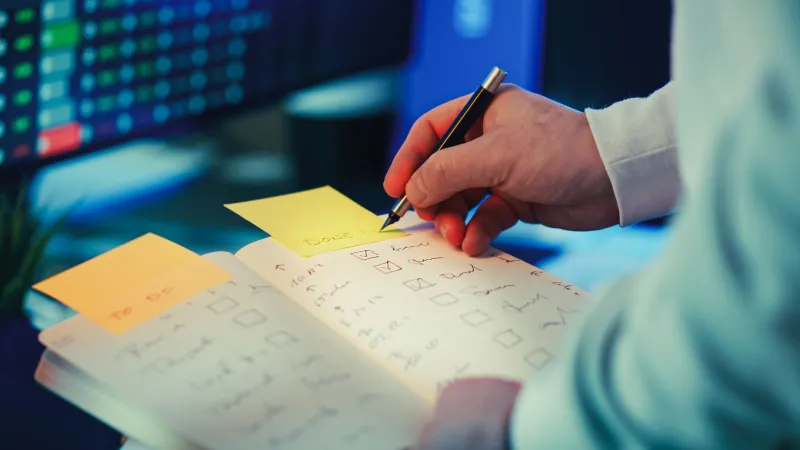
Some researchers suggest building what they call "completion rituals" — small, deliberate acts that mark the end of a task or workday. Closing your laptop at a specific time. Writing down three things you actually finished before you close out for the evening. Even something as simple as physically crossing something off a paper list activates a different kind of satisfaction than clicking a checkbox in an app. It sounds almost embarrassingly low-tech, but the neuroscience behind it is real.
Rethinking What "Productive" Actually Means
The deeper fix, though, is cultural — and that's harder. We've built workplaces, and honestly whole identities, around the idea that busyness signals value. Being overwhelmed has become a strange status symbol. Saying "I've been slammed" is practically a greeting at this point.
Shifting that requires a willingness to define productivity differently — not as maximum output, but as meaningful output. It means asking not just how much you got done, but whether what you did actually mattered to you. That's a harder question, and it doesn't fit neatly into a dashboard. But it's the one your brain is actually trying to get you to answer every time it refuses to let you feel satisfied at 9 p.m.
You finished the list. That's real. The feeling that it wasn't enough? That's just your brain doing what brains do. The trick is learning not to let it write the whole story.