Where Did All the Friends Go? The Slow Collapse of Adult Connection in America
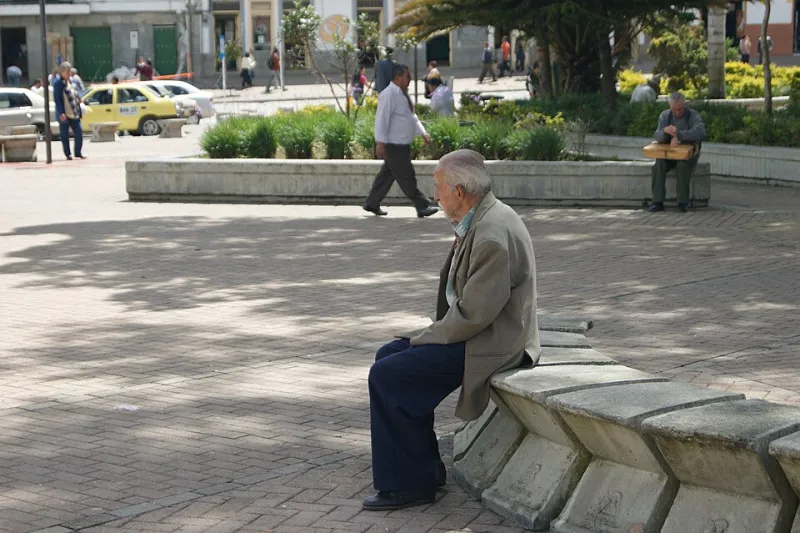
Photo: jaocampoz, CC0, via Wikimedia Commons
The Number That Should Alarm Everyone
In 1990, about 3% of Americans said they had no close friends. By the early 2020s, that number had climbed to around 12% — a fourfold increase in a single generation. Among men specifically, the numbers are even starker: roughly 15% report having no close friends at all.
Let that sink in. One in eight Americans — and nearly one in six men — goes through life without a single person they'd call a true friend.
This isn't just a vibe or a feeling people are reporting. It's a documented, measurable shift in how Americans relate to one another. And the ripple effects touch everything from physical health to political polarization to workplace productivity. The Surgeon General of the United States issued an advisory on loneliness in 2023, comparing the health risks of social isolation to smoking 15 cigarettes a day. That's not hyperbole — that's epidemiology.
So what happened? And more importantly, what can we do about it?
Friendship Doesn't Survive on Good Intentions Alone
Here's something adults rarely admit out loud: making and keeping friends after your mid-20s is genuinely hard. Not emotionally hard (though sometimes that too) — logistically, structurally hard.
Friendship, research suggests, requires three things to develop naturally: proximity, repeated unplanned interaction, and a setting that encourages people to let their guard down. College delivers all three almost automatically. So does a tight-knit neighborhood or a small-town upbringing. But adult American life? It's almost perfectly engineered to prevent them.
People move for jobs, sometimes multiple times a decade. Suburban design means neighbors often don't share sidewalks, parks, or communal spaces — they share a zip code and not much else. Work friendships are complicated by hierarchy, competition, and the fact that remote work has quietly eliminated even the accidental hallway conversations that used to count for something.
And then kids arrive, or demanding careers do, or aging parents need attention — and suddenly the discretionary hours that friendship runs on have evaporated entirely.
"I have people I really like," a 38-year-old marketing manager in Phoenix told me. "But we cancel on each other constantly. Life just gets in the way. And then enough time passes that it starts to feel awkward to reach out, like I've missed a window somehow."
That feeling — the social awkwardness of re-initiating contact after a gap — is something researchers call "friendship atrophy." And it's incredibly common.
The Economic Dimension Nobody Talks About
The friendship recession isn't happening in a vacuum. It's unfolding against a backdrop of economic conditions that have fundamentally reshaped American social life.
Long commutes eat into the hours that used to be available for socializing. The gig economy and second jobs leave little mental or physical energy for maintaining relationships. Stagnant wages in many sectors mean people can't afford the restaurants, concerts, and activities that social life often requires. And housing costs have pushed people further from city centers — away from the density that makes spontaneous social interaction possible.
Class also plays a role in ways that get overlooked. Working-class Americans have seen their "third places" — the bars, bowling alleys, union halls, and community centers that once served as social infrastructure — close at alarming rates over the past few decades. These weren't just places to hang out; they were the institutional glue holding social networks together. When they disappear, the networks often go with them.
Did Social Media Make It Worse?
The honest answer is: probably, but it's complicated.
Social media platforms were supposed to keep us connected. And in some limited ways, they do — they help people maintain weak ties, stay loosely in touch with acquaintances, and find communities around niche interests. That's genuinely valuable.
But there's growing evidence that passive social media use — scrolling through other people's lives rather than actively engaging — creates a sense of social satiation without actually meeting our deeper needs for connection. You feel like you've "checked in" with your friends when really you just watched their vacation photos. The real conversation never happens.
There's also the comparison trap. When everyone else's highlight reel is constantly visible, it's easy to assume you're the only one sitting home alone on a Saturday, when statistically, a lot of those people posting brunch photos are also quietly lonely the rest of the week.
The Health Stakes Are Real
This isn't just a lifestyle issue. The science on loneliness and physical health is now robust enough that researchers treat social isolation as a genuine risk factor — on par with obesity, physical inactivity, and smoking.
Chronic loneliness triggers the body's stress response, raising cortisol levels and promoting inflammation. Over time, that chronic low-grade stress is linked to increased risk of heart disease, stroke, dementia, and premature death. Lonely people also tend to sleep worse, exercise less, and make poorer health decisions — a cluster of effects that compound over years.
For older Americans, the picture is especially grim. Social isolation among seniors is linked to dramatically accelerated cognitive decline. And with Baby Boomers aging into their 70s and 80s, this is a wave that's about to hit the healthcare system hard.
What Actually Works
The good news — and there genuinely is good news — is that intentional community-building works. People are figuring this out in creative, sometimes counterintuitive ways.
Treat friendship like a commitment, not a coincidence. The spontaneous friendships of youth happened because the structure of school or college made them happen automatically. Adult friendships require you to build that structure yourself. Standing weekly dinners. Monthly game nights with a rotating cast. A running group that meets every Saturday morning regardless of weather. Recurring, scheduled, low-pressure gatherings are the scaffolding that friendships need to grow.
Lower the bar for reaching out. A lot of people avoid initiating contact because they feel like they need something elaborate to say after a long gap. They don't. A simple "Hey, I was thinking about you" text is enough. Research on what psychologists call "ambient awareness" shows that small, frequent check-ins maintain relationship warmth far better than infrequent grand gestures.
Invest in third places. Find a coffee shop you go to regularly. Join a rec sports league, a book club, a faith community, a volunteer organization. The specific activity matters less than the regularity and the shared context. Showing up consistently to the same place with the same people is how strangers become acquaintances and acquaintances become friends.
Be willing to be the one who tries. Social initiative is increasingly rare, which means it's also increasingly powerful. Most people are quietly hoping someone will make a plan. Be that person. Yes, you'll get some polite declines. Do it anyway.
Consider co-living and intentional community. A small but growing number of Americans — especially younger adults and seniors — are experimenting with co-housing arrangements, commune-adjacent living situations, and intentional neighborhoods designed around shared space. These aren't for everyone, but they're worth knowing exist.
A Different Way to Think About This
Maybe the most important reframe is this: loneliness isn't a personal failure. It's not a sign that something is wrong with you, that you're unlikable or socially inept. It's a predictable outcome of living in a society that has, largely by accident, stripped away most of the conditions that make friendship easy.
Recognizing that takes the shame out of it. And removing the shame is often the first step toward doing something about it.
Connection is a human need — not a nice-to-have, not a luxury, not something you can substitute with enough Netflix and Instagram. It's as fundamental as sleep or food. And just like those things, it requires actual effort to prioritize in a world that doesn't automatically provide it anymore.
The friendships are out there. So are the people who want them just as much as you do. Someone just has to make the first move.